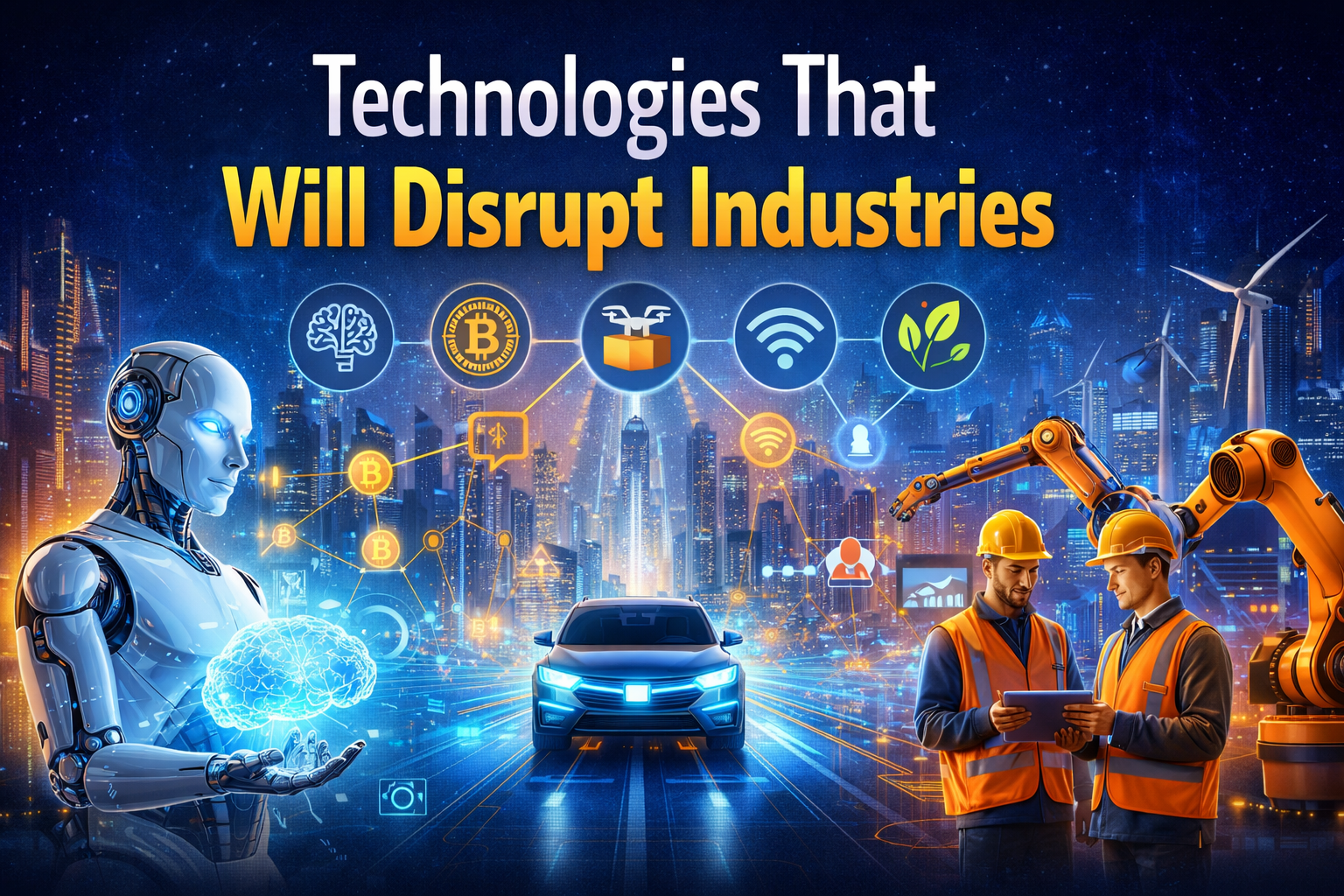
Every few decades, a cluster of technologies emerges that doesn’t just improve how we do things—it fundamentally rewrites the rules. The steam engine didn’t make better factories; it created the factory system itself. Electricity didn’t improve candles; it extended the workday and birthed entire industries. The internet didn’t speed up mail; it redefined commerce, communication, and community.
We’re living through such a moment right now.
The difference this time is the pace. Technologies aren’t arriving one at a time, with decades to adjust. They’re converging—AI, energy, biotech, computing, space—each accelerating the others, creating possibilities that were science fiction just five years ago. According to Frost & Sullivan’s 16th annual Top 50 Technologies report, these breakthrough innovations are poised to shape a $1.25–$1.35 trillion market opportunity by 2030 .
The question for business leaders, entrepreneurs, and professionals isn’t whether these technologies that will disrupt industries are coming. They’re already here. The question is whether you’ll be the disruptor or the disrupted.
This guide explores the technologies poised to reshape entire sectors over the next three to five years. We’ll look at what’s real versus what’s hype, where the opportunities lie, and how to prepare for changes that are coming faster than most organizations realize.
Let’s dive into the future.
Part 1: Physical AI—When Intelligence Leaves the Screen
For the past decade, AI has lived in screens—chatbots, search engines, content generators. That’s changing. Technologies that will disrupt industries increasingly involve AI that interacts with the physical world.
What Is Physical AI?
Physical AI refers to systems that understand and act within three-dimensional reality. Robots that navigate cluttered warehouses. Autonomous vehicles that predict pedestrian behavior. Drones that inspect infrastructure. Machines that see, sense, and respond to the physical world with human-like adaptability .
According to Deloitte’s “Technology Trends 2026” report, AI is now giving robots the ability to move from “executing instructions” to “perceiving and deciding” in real time . This isn’t incremental improvement—it’s a fundamental shift in what machines can do.
The Robotics Boom
The numbers are striking. Juniper Research predicts “substantial advances in humanoid robotics” over the next three years, with robots moving from labs to revenue-generating deployments in biopharma labs, manufacturing lines, and logistics warehouses . Not prototypes. Not pilots. Actual systems delivering ROI.
Silicon Valley is shifting attention back to hardware as demand for compute and energy accelerates. Chips, energy systems, and critical physical infrastructure are reemerging as the engines of the next wave of progress . Venture capitalists who spent years chasing software bets are now funding robotics companies with the same enthusiasm.
Industries Being Transformed
- Manufacturing: AI-driven robots that adapt to product changes without reprogramming
- Logistics: Autonomous systems that optimize warehouse operations 24/7
- Healthcare: Surgical assistants and rehabilitation robots that augment human capabilities
- Hospitality: Service robots handling routine tasks, freeing humans for genuine interaction
- Defense: Dual-use technologies serving both commercial and national security applications
What This Means
For businesses, physical AI means rethinking operations. Tasks that required human presence—inspection, material handling, quality control—can now be automated with systems that learn and improve. The companies that integrate these capabilities first will build cost advantages that competitors can’t easily match.
Part 2: The Agency Economy—From Doing to Directing
Perhaps the most profound shift in how we work is the rise of AI agents—systems that don’t just respond to prompts but pursue goals independently.
What Are AI Agents?
An AI agent can understand a task, break it into steps, execute those steps, and adapt when things go wrong. Unlike chatbots that wait for instructions, agents take initiative. They maintain context across sessions. They coordinate with other agents. They get things done .
According to the IEEE Computer Society’s 2026 Technology Predictions, “AI agents will become standard in business environments, eliminating repetitive and routine work” . This isn’t speculation—nearly half of enterprises now use autonomous AI agents in operations, according to a Deloitte study .
The Shift in Human Roles
This changes the fundamental nature of work. For decades, technology focused on productivity—helping us work faster. Now, as agents take on execution, human value is moving upstream to direction, judgment, creativity, and decision-making .
Teams spend less time performing tasks and more time setting goals, defining constraints, and shaping outcomes. The shift isn’t about humans doing less—it’s about doing fundamentally different things that only humans excel at.
Industries Being Transformed:
The Multi-Agent Future
The next evolution is multi-agent systems—ecosystems of specialized agents working together. Rather than one massive model trying to do everything, enterprises deploy fleets of domain-specific agents that collaborate .
One agent handles customer service. Another monitors supply chains. A third analyzes financial data. They communicate, coordinate, and escalate to humans only when necessary.
What This Means
In the agency economy, competitive advantage shifts from having the best tools to having the best orchestration. Organizations that redesign roles around AI collaboration—where humans direct and agents execute—will unlock entirely new levels of impact.
Part 3: Energy Technologies—Powering the Future
Every technology trend ultimately depends on energy. AI’s explosive growth, electric vehicle adoption, and industrial electrification are colliding with the physical limits of current energy systems. The result is unprecedented innovation in how we generate, store, and distribute power.
Next-Generation Nuclear
Nuclear power is getting a radical reboot. New designs rely on alternative fuels and cooling systems or take up less space, which could get more reactors online faster . Small Modular Reactors (SMRs) are moving from concept to regulatory approval, with Juniper Research noting they represent a “potential disruptive impact on energy generation” .
For energy-intensive industries—data centers, manufacturing, computing—reliable, carbon-free baseload power is becoming a strategic necessity, not just an environmental consideration.
The Elastic Grid
Energy is shifting from a centralized utility to a decentralized, software-defined network coordinated by AI. Virtual Power Plants (VPPs) expanded 33% year-over-year in 2024, powered largely by EVs and home batteries contributing energy back to the grid .
The IEEE Computer Society predicts the future power grid will be “AI-driven, predictive, and increasingly autonomous” . This means:
- Real-time balancing of distributed energy resources
- Predictive maintenance that prevents outages
- Dynamic pricing that shifts consumption to off-peak hours
- Integration of millions of devices (EVs, heat pumps, batteries) as grid assets
Sodium-Ion Batteries
Lithium-ion batteries have powered the last decade, but they face supply constraints and safety concerns. Sodium-ion batteries, made from abundant materials like salt, are emerging as a cheaper, safer alternative .
Backed by major players and public investment, they’re poised to power grids and affordable EVs worldwide. For industries dependent on energy storage—transportation, utilities, consumer electronics—this could reshape cost structures and supply chains.
E-Fuels and Hydrogen
Sustainability technologies are enabling efficient clean energy storage, transport, and utilization. The e-fuels ecosystem has seen more than 3,000 patents filed between 2023 and 2025, reflecting strong innovation momentum . Europe and North America are leading adoption, driven by regulatory frameworks and decarbonization mandates.
What This Means
For business leaders, energy is no longer just an operating expense—it’s a strategic variable. Companies that secure reliable, affordable, clean energy will have advantages that competitors reliant on volatile fossil fuel markets can’t match.
Part 4: Healthcare and Biotech—Engineering Life
Healthcare is being transformed by technologies that don’t just treat disease but reprogram the body’s fundamental mechanisms.
GLP-1 Receptor Agonists
Originally developed for diabetes, GLP-1 drugs have exploded into a new therapeutic category. According to Frost & Sullivan, these agents are “enabling scalable disease management while significantly accelerating therapeutic innovation” .
The implications extend far beyond weight loss. Research is exploring applications in cardiovascular disease, addiction, neurodegenerative conditions, and more. For pharmaceutical companies, this represents one of the largest market opportunities in decades.
AI-Enabled Drug Discovery
The traditional drug development model—decades and billions of dollars per molecule—is being disrupted. AI can simulate molecular interactions, predict side effects, and identify promising candidates in months rather than years .
Kanyi Maqubela, managing partner at Kindred Ventures, predicts that “AI will discover at least one groundbreaking pharmaceutical that will start Phase I clinical trials” in 2026 . If this proves accurate, it will validate an entirely new approach to therapeutic discovery.
Adaptive Bio-AI Interfaces
The IEEE Computer Society identifies “adaptive bio-AI interfaces” as a key trend for 2026—systems that continuously sense and interpret human biological signals, enabling real-time therapy adjustment .
Imagine a closed-loop system for mental health that detects rising anxiety from physiological signals and delivers personalized calming interventions before the user even feels distressed. Or diabetes management that continuously adjusts insulin based on activity, stress, and meal timing without finger pricks .
Base Editing and Gene Resurrection
MIT Technology Review’s “10 Breakthrough Technologies 2026” highlights two developments that sound like science fiction :
- Base-edited baby: When just seven months old, baby KJ became the first person to receive a personalized gene-editing treatment. A clinical trial is now planned, and bespoke gene-editing drugs could be approved within the next few years.
- Gene resurrection: Growing banks of gene information on extinct creatures are providing clues to new treatments and suggesting solutions to climate change—and may help save endangered species.
What This Means
For healthcare incumbents, these technologies represent both threat and opportunity. Traditional pharmaceutical business models—blockbuster drugs with years of exclusivity—may give way to personalized, continuously adapting treatments. Companies that embrace the shift will thrive; those that resist will find themselves disrupted.
Part 5: Computing and Security—Building Trust in a Digital World
As technology becomes more powerful, the infrastructure beneath it must evolve. Several technologies that will disrupt industries address this foundation.
Post-Quantum Cryptography
Here’s the problem: quantum computers, when mature, will be able to break much of today’s encryption. And adversaries may already be harvesting encrypted data, waiting for the technology to decrypt it .
Post-quantum cryptography (PQC) addresses this by developing encryption algorithms designed to resist attacks from both classical and quantum computers. NIST is finalizing standards, and forward-thinking organizations are beginning hybrid deployments that combine classical and quantum-resistant algorithms .
For any industry handling sensitive data—finance, healthcare, government, critical infrastructure—this transition must happen before quantum computers arrive. The window for proactive defense is closing.
Neuromorphic Computing
Today’s AI chips are still fundamentally based on architectures designed for spreadsheets, not brains. Neuromorphic computing takes a different approach—chips designed to mimic neural structures, with massive parallelism and event-driven processing .
Juniper Research predicts “commercial chipsets that address AI bottlenecks” will launch in 2026 . These chips could bring sophisticated AI to devices that currently can’t support it—smartphones, sensors, industrial equipment—without constant cloud connectivity.
Hyperscale AI Data Centers
The race for AI supremacy has supercharged data centers. Hyperscale AI data centers pack powerful computer chips into synchronized clusters that work like giant, high-speed supercomputers—sizzling hot, power-hungry behemoths pushing infrastructure to their limits .
This creates opportunities and challenges. Opportunities for companies that can build and operate this infrastructure. Challenges around energy consumption, cooling, and environmental impact. The IEEE Computer Society notes that AI demand will force further innovation in energy production, management, and dissipation .
Satellite Direct-to-Cell Communications
Imagine never having a dead zone again. Satellite direct-to-cell technology enables standard smartphones to connect directly to satellites when terrestrial networks are unavailable .
This could increase the reliability and coverage of cell phone, Bluetooth, and other technologies, as well as creating opportunities to expand service to previously unconnected populations . For industries operating in remote areas—mining, shipping, agriculture, emergency services—this is transformative.
What This Means
Computing and security infrastructure is becoming strategic. Companies can no longer treat these as back-office functions to optimize for cost. They’re core capabilities that enable or constrain everything else.
Part 6: The Convergence Effect
The most important insight about technologies that will disrupt industries isn’t any single breakthrough—it’s how they build on each other.
- Physical AI requires advanced chips (neuromorphic computing)
- Those chips need massive energy (next-gen nuclear, elastic grid)
- Energy systems need AI to coordinate distributed resources
- Healthcare advances depend on computing power
- Computing advances depend on security (post-quantum cryptography)
This convergence means the whole is greater than the sum of its parts. A breakthrough in one domain accelerates progress in others. The pace of change isn’t linear—it’s exponential.
According to Sussex Innovation, “What ties together many of the trends discussed above isn’t standalone innovation but integration; how do connectivity, compute power, immersive interfaces, and automated systems converge into new experiences, industries and business models?”
Analysts are describing the current moment as the beginning of a new wave of technology transformation, where intelligent systems blend with physical infrastructure and human interaction at scale .
Part 7: Industries Facing Disruption
Let’s look at specific industries and which technologies will hit them hardest.
Financial Services
The prediction: Traditional banks will lose more mass affluent customers to fintechs in 2026 than ever before. “It used to be that fintechs served the customers banks didn’t want. The less affluent. The young. Now fintechs have grown up and so have their customers” .
Healthcare
| Technology | Impact |
|---|---|
| GLP-1s | Reshaping treatment for obesity, diabetes, and beyond |
| AI drug discovery | Accelerating therapeutic development |
| Adaptive bio-AI | Continuous, personalized treatment |
| Base editing | One-time cures for genetic diseases |
The prediction: “2026 will be the year AI feels clinically real. With tools like OpenEvidence already adopted by nearly half of U.S. physicians, healthcare is moving faster than software” .
Manufacturing and Logistics
The prediction: “2026 will see the return of the Valley of Death to defense tech as the law of large numbers forces growing companies to seek larger and larger contracts in the context of a slow-growing defense budget” .
Energy and Utilities
| Technology | Impact |
|---|---|
| Small Modular Reactors | Distributed, reliable nuclear power |
| Elastic grid | AI-coordinated energy distribution |
| Sodium-ion batteries | Cheaper, safer energy storage |
| E-fuels | Decarbonizing hard-to-electrify sectors |
The prediction: “Sustainability technologies are enabling efficient clean energy storage, transport, and utilization, supporting global decarbonization and long-term energy security” .
Part 8: Preparing for Disruption
For business leaders and professionals, these technologies that will disrupt industries raise an urgent question: How do we prepare?
For Organizations
- Develop technology literacy. Leaders don’t need to be experts, but they need enough understanding to ask good questions and spot opportunities.
- Experiment deliberately. Run pilots in areas where disruption is likely. Fail fast, learn cheaply, scale what works.
- Build adaptable infrastructure. Rigid systems become anchors. Modular, API-enabled architectures allow you to plug in new capabilities as they emerge.
- Invest in talent. The organizations that thrive will be those whose people can work alongside intelligent systems, directing rather than executing .
- Monitor convergence. Watch not just individual technologies, but how they combine. The biggest opportunities are often at the intersections.
For Individuals
- Focus on judgment. AI can generate, summarize, and predict. It struggles with context, nuance, and accountability. That’s where human value lies.
- Cultivate adaptability. The half-life of specific technical skills is shrinking. The ability to learn, unlearn, and relearn is becoming the meta-skill that matters most.
- Understand your industry’s exposure. Which of these technologies will hit your sector first? What would that look like? What can you do now to prepare?
- Build network and community. In times of rapid change, who you know and who knows you becomes even more valuable.
Conclusion
Let’s step back and survey the landscape.
The technologies that will disrupt industries over the next five years aren’t incremental improvements. They’re fundamental shifts in how we generate energy, manufacture goods, discover medicines, secure information, and organize work.
Physical AI is giving machines the ability to perceive and decide, transforming factories, warehouses, and hospitals . The agency economy is shifting human roles from execution to direction, from doing to deciding . Energy technologies are rewriting the rules of power generation and distribution . Healthcare breakthroughs are moving from treating disease to reprogramming biology . Computing advances are building the infrastructure for everything else .
The common thread is convergence. These technologies don’t advance in isolation—they accelerate each other. AI needs better chips. Better chips need more energy. More energy needs smarter grids. Smarter grids need AI.
This means the pace of change won’t slow. It will accelerate.
For business leaders, the implications are clear. Standing still is not an option. The companies that thrive will be those that develop technology literacy, experiment deliberately, build adaptable infrastructure, invest in talent, and watch for convergence.
For individuals, the path forward is equally clear. Focus on judgment, cultivate adaptability, understand your industry’s exposure, and build your network. The future belongs to those who can work alongside intelligent systems, directing their power toward human purposes.
The disruption is coming. The only question is whether you’ll shape it or be shaped by it.